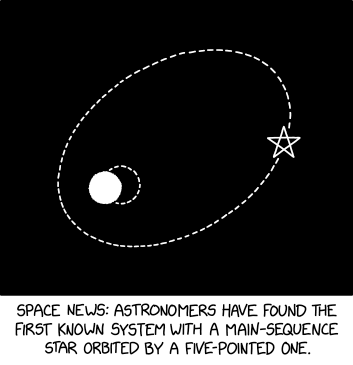
obviously a higher-end pharmacy
Feb. 13th, 2026 08:57 am![[personal profile]](https://www.dreamwidth.org/img/silk/identity/user.png) runpunkrun
runpunkrunHad a dream I was in a drugstore and Bad Bunny was sitting up in the balcony and he threw a bottle of aspirin at me and I ran across the store and scaled the wall to get up in his face about it.
(no subject)
Feb. 13th, 2026 11:52 amtwistedchickSweetie is home from the vet, with medicine to rub on her ear (for absorption) and pills (good luck to us on that) and a shot from the vet to help things move through her better. They took blood tests also but we'll find out about them Monday.
She is sniffing at food, and walking around outside of her hiding place, so I think she's feeling a little better. Steve said she purred for them, which is very good.
She is sniffing at food, and walking around outside of her hiding place, so I think she's feeling a little better. Steve said she purred for them, which is very good.
updates of a sort
Feb. 12th, 2026 02:34 pmtwistedchickSweetie has a vet appointment tomorrow. I think she's constipated; she is peeing (including on the back room rug, which I sprayed peroxide on after mopping it up), but not passing anything. She is not eating, though I think from the pee volume she is drinking water. And she is still mainly hiding behind stuff under the ancient (possibly post-colonial era fourth-hand) desk with the enormous 92-year-old sort-of-easy-chair that is hard to move). Since she is able to get up and walk well enough, I will slide down the front of the chair under the desk tomorrow and try to move her, which will make her get up and walk out, where Steve can grab her.
My throat is okay now. Maybe something is going around? A one-day sore throat that vanishes?
My throat is okay now. Maybe something is going around? A one-day sore throat that vanishes?
Star Trek: Starfleet Academy 1.01. - 1.06
Feb. 12th, 2026 05:10 pmselenakBecause there was good word of mouth from various friends and trusty reviewers, I decided to give the latest Star Trek show a go, have now marathoned the six episodes released so far, and can report that word of mouth was correct: this latest installment, which is set in the 31rd century last seen in Star Trek: Discovery, shows none of the weaknesses of the third season of ST: SNW and is actually really good. Mind you, watching the first three episodes I thought, okay, they're good, not not groundbreaking, and some of the reactions made me expect more, but then came episodes 3 - 6 . building on the previous ones and fleshing out more characters, and I went "wow!" myself. And also "awwwww" at certain points. More beneath the spoiler cut.
The reason why I wasn't wowed by the first three in the way I was by the later three is that they included some clichés I never much cared for, such as a Marine, err, Starfleet instructor yelling "give me 100 pushups" . And the only school/school prank war I enjoyed fictionally was Das fliegende Klassenzimmer by Erich Kästner, plus I thought, really, do we need more mean Vulcans. These nitpicks aside (and the prank war did have its plusses as well), the first three episodes do a solid job in introducing the premise, the setting, and some of the main characters. They also showed versatality in format: the pilot episode has more action while the second episode is a classic ST ethical dilemma with lots of debate type of episode (and not the last one of the first six), and the third episode while having some serious character stuff mainly goes for broad comedy. Which is all fine, and confidence-building, but with episode 4, the show simply becomes more than that as we get our first hardcore (previously supporting) character episode which simultanously is an ethical dilemma episode and adds to the overall Star Trek lore because it tells us how the Klingons fared post Burn, something Disco did not. Now after a quiet spotlight on supporting character episode I expected the next to revert back to ensemble or main character format, but no! We got another " (different) supporting character in the spotlight" episode - which also doubled as an unabashed love declaration to one Benjamin Sisko in particular and DS9 in general. Which was great, because while other more recent ST shows did include some nods to DS9, it never got as much love as TOS and TNG did from the new kids on the block. Until now. And it was especially lovely to see because it did nostalgia right instead of going ST: Picard season 3, sigh, or follow ST:STNW's increasing tendency to become ST: TOS in its cast. Instead, it did a Star Trek: Prodigy. By which I mean: The love for the "old" characters as strong and great - but it was used in service of character fleshing out and growth of the new characters of the new show. Complimenting them, instead of replacing them. Homage, instead of a rerun. It was great. And then episode 6 went for a taut space thriller while also using what we learned so far about the characters and sharpening the profile of who seems to be the season's main villain. (And it took me until this episode to finally recall where I had heard the voice before. It was John Adams, I mean Paul Giametti!)
One more general observation: As a Discovery fan, I was delighted to see Admiral Vance again in most of the episodes, being his calm and responsible self, ditto for Jett Reno snarkng and being dead-pan as ever, and a bit surprised that Mary Wiseman has yet to make an appearance because I thought she was supposed to be a regular. Speaking of Discovery, its last two seasons feature a supporting guest star, Laira Rillak, who has both Bajoran and Cardassian heritage, and I thought that was great and that by the 31st Centuy, there ought to be a lot more "hybrids" of spacefaring nations with centuries of interaction . Starfleet Academy thought so, too, and we got indeed not just another hybrid in the regular cast but also several others popping up. And I really like the sheer number of middle-aged women we get in addition to the kids. Oh, and evidently the return to Discovery territory also meant the return to featured queer relationships. Excellent.
( Now onto more spoilery territory with comments on the individiual characters and their development so far. )
In conclusion: it's a really good first season so far! May it continue to be!
The reason why I wasn't wowed by the first three in the way I was by the later three is that they included some clichés I never much cared for, such as a Marine, err, Starfleet instructor yelling "give me 100 pushups" . And the only school/school prank war I enjoyed fictionally was Das fliegende Klassenzimmer by Erich Kästner, plus I thought, really, do we need more mean Vulcans. These nitpicks aside (and the prank war did have its plusses as well), the first three episodes do a solid job in introducing the premise, the setting, and some of the main characters. They also showed versatality in format: the pilot episode has more action while the second episode is a classic ST ethical dilemma with lots of debate type of episode (and not the last one of the first six), and the third episode while having some serious character stuff mainly goes for broad comedy. Which is all fine, and confidence-building, but with episode 4, the show simply becomes more than that as we get our first hardcore (previously supporting) character episode which simultanously is an ethical dilemma episode and adds to the overall Star Trek lore because it tells us how the Klingons fared post Burn, something Disco did not. Now after a quiet spotlight on supporting character episode I expected the next to revert back to ensemble or main character format, but no! We got another " (different) supporting character in the spotlight" episode - which also doubled as an unabashed love declaration to one Benjamin Sisko in particular and DS9 in general. Which was great, because while other more recent ST shows did include some nods to DS9, it never got as much love as TOS and TNG did from the new kids on the block. Until now. And it was especially lovely to see because it did nostalgia right instead of going ST: Picard season 3, sigh, or follow ST:STNW's increasing tendency to become ST: TOS in its cast. Instead, it did a Star Trek: Prodigy. By which I mean: The love for the "old" characters as strong and great - but it was used in service of character fleshing out and growth of the new characters of the new show. Complimenting them, instead of replacing them. Homage, instead of a rerun. It was great. And then episode 6 went for a taut space thriller while also using what we learned so far about the characters and sharpening the profile of who seems to be the season's main villain. (And it took me until this episode to finally recall where I had heard the voice before. It was John Adams, I mean Paul Giametti!)
One more general observation: As a Discovery fan, I was delighted to see Admiral Vance again in most of the episodes, being his calm and responsible self, ditto for Jett Reno snarkng and being dead-pan as ever, and a bit surprised that Mary Wiseman has yet to make an appearance because I thought she was supposed to be a regular. Speaking of Discovery, its last two seasons feature a supporting guest star, Laira Rillak, who has both Bajoran and Cardassian heritage, and I thought that was great and that by the 31st Centuy, there ought to be a lot more "hybrids" of spacefaring nations with centuries of interaction . Starfleet Academy thought so, too, and we got indeed not just another hybrid in the regular cast but also several others popping up. And I really like the sheer number of middle-aged women we get in addition to the kids. Oh, and evidently the return to Discovery territory also meant the return to featured queer relationships. Excellent.
( Now onto more spoilery territory with comments on the individiual characters and their development so far. )
In conclusion: it's a really good first season so far! May it continue to be!

![[syndicated profile]](https://www.dreamwidth.org/img/silk/identity/feed.png)
(no subject)
Feb. 11th, 2026 01:13 pmtwistedchickSweetie, our 14-lb Kliban cat (dark gray and black tabby) hasn't been feeling well. She was upchucking yesterday, not furballs, and I think she may be allergic to the food. But this morning we couldn't find her at all -- looked downstairs and main floor -- until the SU located her in the most inaccessible place in the house: on the old shag rug under the desk in the library/not so spare room. There, she's under a large desk and blocked in by a large chair and neither of us are up to digging her out. She is reasonably alert, so we're waiting for her to emerge at some point. I've put out water for her, and food that I know she can eat (non fish). And now we wait.
Meanwhile, there's a gland at the top of my throat that is trying to decide if it's swollen or not.
Meanwhile, there's a gland at the top of my throat that is trying to decide if it's swollen or not.
(no subject)
Feb. 11th, 2026 12:27 pmconuly posting in ![[community profile]](https://www.dreamwidth.org/img/silk/identity/community.png) agonyaunt
agonyauntDEAR ABBY: It seems that everywhere I go, people expect tips. Yesterday, I pulled up to the drive-through at a cookie store, and before I paid or was handed my cookies, the clerk asked, "Would you like to leave a tip?" My niece recently told me that after she left a tip at a restaurant, the server followed her outside and asked if she hadn't been a very good server because the tip was small. I can give you more examples just from my family regarding their experience with tipping.
In this economy, I don't feel the 20% rule should apply. For the price of a lunch for two at a sit-down restaurant these days, the tip costs as much as a small entree. When I go through a drive-through, I don't feel I need to tip because I'm not inside using their facility. But if I don't, I get a disappointed look from the gal who gets paid to make and hand me my drink. What are your thoughts? -- TIPPED OUT IN IDAHO
( Read more... )
In this economy, I don't feel the 20% rule should apply. For the price of a lunch for two at a sit-down restaurant these days, the tip costs as much as a small entree. When I go through a drive-through, I don't feel I need to tip because I'm not inside using their facility. But if I don't, I get a disappointed look from the gal who gets paid to make and hand me my drink. What are your thoughts? -- TIPPED OUT IN IDAHO
( Read more... )
Ask a Manager: my employee was excluded from a team-building event because of their weight...
Feb. 11th, 2026 11:06 amUpdate on legal cases: one new victory! :) One new restriction :(
Feb. 10th, 2026 03:03 pm![[staff profile]](https://www.dreamwidth.org/img/silk/identity/user_staff.png) denise posting in
denise posting in ![[site community profile]](https://www.dreamwidth.org/img/comm_staff.png) dw_news
dw_newsBack in August of 2025, we announced a temporary block on account creation for users under the age of 18 from the state of Tennessee, due to the court in Netchoice's challenge to the law (which we're a part of!) refusing to prevent the law from being enforced while the lawsuit plays out. Today, I am sad to announce that we've had to add South Carolina to that list. When creating an account, you will now be asked if you're a resident of Tennessee or South Carolina. If you are, and your birthdate shows you're under 18, you won't be able to create an account.
We're very sorry to have to do this, and especially on such short notice. The reason for it: on Friday, South Carolina governor Henry McMaster signed the South Carolina Age-Appropriate Design Code Act into law, with an effective date of immediately. The law is so incredibly poorly written it took us several days to even figure out what the hell South Carolina wants us to do and whether or not we're covered by it. We're still not entirely 100% sure about the former, but in regards to the latter, we're pretty sure the fact we use Google Analytics on some site pages (for OS/platform/browser capability analysis) means we will be covered by the law. Thankfully, the law does not mandate a specific form of age verification, unlike many of the other state laws we're fighting, so we're likewise pretty sure that just stopping people under 18 from creating an account will be enough to comply without performing intrusive and privacy-invasive third-party age verification. We think. Maybe. (It's a really, really badly written law. I don't know whether they intended to write it in a way that means officers of the company can potentially be sentenced to jail time for violating it, but that's certainly one possible way to read it.)
Netchoice filed their lawsuit against SC over the law as I was working on making this change and writing this news post -- so recently it's not even showing up in RECAP yet for me to link y'all to! -- but here's the complaint as filed in the lawsuit, Netchoice v Wilson. Please note that I didn't even have to write the declaration yet (although I will be): we are cited in the complaint itself with a link to our August news post as evidence of why these laws burden small websites and create legal uncertainty that causes a chilling effect on speech. \o/
In fact, that's the victory: in December, the judge ruled in favor of Netchoice in Netchoice v Murrill, the lawsuit over Louisiana's age-verification law Act 456, finding (once again) that requiring age verification to access social media is unconstitutional. Judge deGravelles' ruling was not simply a preliminary injunction: this was a final, dispositive ruling stating clearly and unambiguously "Louisiana Revised Statutes §§51:1751–1754 violate the First Amendment of the U.S. Constitution, as incorporated by the Fourteenth Amendment of the U.S. Constitution", as well as awarding Netchoice their costs and attorney's fees for bringing the lawsuit. We didn't provide a declaration in that one, because Act 456, may it rot in hell, had a total registered user threshold we don't meet. That didn't stop Netchoice's lawyers from pointing out that we were forced to block service to Mississippi and restrict registration in Tennessee (pointing, again, to that news post), and Judge deGravelles found our example so compelling that we are cited twice in his ruling, thus marking the first time we've helped to get one of these laws enjoined or overturned just by existing. I think that's a new career high point for me.
I need to find an afternoon to sit down and write an update fordw_advocacy highlighting everything that's going on (and what stage the lawsuits are in), because folks who know there's Some Shenanigans afoot in their state keep asking us whether we're going to have to put any restrictions on their states. I'll repeat my promise to you all: we will fight every state attempt to impose mandatory age verification and deanonymization on our users as hard as we possibly can, and we will keep actions like this to the clear cases where there's no doubt that we have to take action in order to prevent liability.
In cases like SC, where the law takes immediate effect, or like TN and MS, where the district court declines to issue a temporary injunction or the district court issues a temporary injunction and the appellate court overturns it, we may need to take some steps to limit our potential liability: when that happens, we'll tell you what we're doing as fast as we possibly can. (Sometimes it takes a little while for us to figure out the exact implications of a newly passed law or run the risk assessment on a law that the courts declined to enjoin. Netchoice's lawyers are excellent, but they're Netchoice's lawyers, not ours: we have to figure out our obligations ourselves. I am so very thankful that even though we are poor in money, we are very rich in friends, and we have a wide range of people we can go to for help.)
In cases where Netchoice filed the lawsuit before the law's effective date, there's a pending motion for a preliminary injunction, the court hasn't ruled on the motion yet, and we're specifically named in the motion for preliminary injunction as a Netchoice member the law would apply to, we generally evaluate that the risk is low enough we can wait and see what the judge decides. (Right now, for instance, that's Netchoice v Jones, formerly Netchoice v Miyares, mentioned in our December news post: the judge has not yet ruled on the motion for preliminary injunction.) If the judge grants the injunction, we won't need to do anything, because the state will be prevented from enforcing the law. If the judge doesn't grant the injunction, we'll figure out what we need to do then, and we'll let you know as soon as we know.
I know it's frustrating for people to not know what's going to happen! Believe me, it's just as frustrating for us: you would not believe how much of my time is taken up by tracking all of this. I keep trying to find time to updatedw_advocacy so people know the status of all the various lawsuits (and what actions we've taken in response), but every time I think I might have a second, something else happens like this SC law and I have to scramble to figure out what we need to do. We will continue to update dw_news whenever we do have to take an action that restricts any of our users, though, as soon as something happens that may make us have to take an action, and we will give you as much warning as we possibly can. It is absolutely ridiculous that we still have to have this fight, but we're going to keep fighting it for as long as we have to and as hard as we need to.
I look forward to the day we can lift the restrictions on Mississippi, Tennessee, and now South Carolina, and I apologize again to our users (and to the people who temporarily aren't able to become our users) from those states.
We're very sorry to have to do this, and especially on such short notice. The reason for it: on Friday, South Carolina governor Henry McMaster signed the South Carolina Age-Appropriate Design Code Act into law, with an effective date of immediately. The law is so incredibly poorly written it took us several days to even figure out what the hell South Carolina wants us to do and whether or not we're covered by it. We're still not entirely 100% sure about the former, but in regards to the latter, we're pretty sure the fact we use Google Analytics on some site pages (for OS/platform/browser capability analysis) means we will be covered by the law. Thankfully, the law does not mandate a specific form of age verification, unlike many of the other state laws we're fighting, so we're likewise pretty sure that just stopping people under 18 from creating an account will be enough to comply without performing intrusive and privacy-invasive third-party age verification. We think. Maybe. (It's a really, really badly written law. I don't know whether they intended to write it in a way that means officers of the company can potentially be sentenced to jail time for violating it, but that's certainly one possible way to read it.)
Netchoice filed their lawsuit against SC over the law as I was working on making this change and writing this news post -- so recently it's not even showing up in RECAP yet for me to link y'all to! -- but here's the complaint as filed in the lawsuit, Netchoice v Wilson. Please note that I didn't even have to write the declaration yet (although I will be): we are cited in the complaint itself with a link to our August news post as evidence of why these laws burden small websites and create legal uncertainty that causes a chilling effect on speech. \o/
In fact, that's the victory: in December, the judge ruled in favor of Netchoice in Netchoice v Murrill, the lawsuit over Louisiana's age-verification law Act 456, finding (once again) that requiring age verification to access social media is unconstitutional. Judge deGravelles' ruling was not simply a preliminary injunction: this was a final, dispositive ruling stating clearly and unambiguously "Louisiana Revised Statutes §§51:1751–1754 violate the First Amendment of the U.S. Constitution, as incorporated by the Fourteenth Amendment of the U.S. Constitution", as well as awarding Netchoice their costs and attorney's fees for bringing the lawsuit. We didn't provide a declaration in that one, because Act 456, may it rot in hell, had a total registered user threshold we don't meet. That didn't stop Netchoice's lawyers from pointing out that we were forced to block service to Mississippi and restrict registration in Tennessee (pointing, again, to that news post), and Judge deGravelles found our example so compelling that we are cited twice in his ruling, thus marking the first time we've helped to get one of these laws enjoined or overturned just by existing. I think that's a new career high point for me.
I need to find an afternoon to sit down and write an update for
dw_advocacy highlighting everything that's going on (and what stage the lawsuits are in), because folks who know there's Some Shenanigans afoot in their state keep asking us whether we're going to have to put any restrictions on their states. I'll repeat my promise to you all: we will fight every state attempt to impose mandatory age verification and deanonymization on our users as hard as we possibly can, and we will keep actions like this to the clear cases where there's no doubt that we have to take action in order to prevent liability. In cases like SC, where the law takes immediate effect, or like TN and MS, where the district court declines to issue a temporary injunction or the district court issues a temporary injunction and the appellate court overturns it, we may need to take some steps to limit our potential liability: when that happens, we'll tell you what we're doing as fast as we possibly can. (Sometimes it takes a little while for us to figure out the exact implications of a newly passed law or run the risk assessment on a law that the courts declined to enjoin. Netchoice's lawyers are excellent, but they're Netchoice's lawyers, not ours: we have to figure out our obligations ourselves. I am so very thankful that even though we are poor in money, we are very rich in friends, and we have a wide range of people we can go to for help.)
In cases where Netchoice filed the lawsuit before the law's effective date, there's a pending motion for a preliminary injunction, the court hasn't ruled on the motion yet, and we're specifically named in the motion for preliminary injunction as a Netchoice member the law would apply to, we generally evaluate that the risk is low enough we can wait and see what the judge decides. (Right now, for instance, that's Netchoice v Jones, formerly Netchoice v Miyares, mentioned in our December news post: the judge has not yet ruled on the motion for preliminary injunction.) If the judge grants the injunction, we won't need to do anything, because the state will be prevented from enforcing the law. If the judge doesn't grant the injunction, we'll figure out what we need to do then, and we'll let you know as soon as we know.
I know it's frustrating for people to not know what's going to happen! Believe me, it's just as frustrating for us: you would not believe how much of my time is taken up by tracking all of this. I keep trying to find time to update
dw_advocacy so people know the status of all the various lawsuits (and what actions we've taken in response), but every time I think I might have a second, something else happens like this SC law and I have to scramble to figure out what we need to do. We will continue to update dw_news whenever we do have to take an action that restricts any of our users, though, as soon as something happens that may make us have to take an action, and we will give you as much warning as we possibly can. It is absolutely ridiculous that we still have to have this fight, but we're going to keep fighting it for as long as we have to and as hard as we need to. I look forward to the day we can lift the restrictions on Mississippi, Tennessee, and now South Carolina, and I apologize again to our users (and to the people who temporarily aren't able to become our users) from those states.

The Night Manager (Season 2)
Feb. 8th, 2026 05:37 pmselenakI am really torn about this one. On the one hand, all the downsides I assumed when first hearing about this and when watching the trailer turned out not to be the case. On the other hand, something I hadn't expected did happen - two somethings, actually - and both to my favourite character from the original, and I'm still massively annoyed about this.
What I thought/feared: because The Night Manager had been such a success, they'd simply go for the (unnecessary) repeat sequel formula, with Jonathan Pine motivated by personal loss and vengeance (again), and the two new characters, arms dealer Teddy Santos, as a Richard Roper copy, and the sole woman focused on in the trailer, Roxana, in the role of beautiful girlfriend of the villain falling in love with our hero. This turned out not to be the case, though the first episode seemed to indicate it would be, with just enough differences to make it entertaining. Then more episodes happened, and I sat up and thought: Oh. Oh. That....is actually a really clever twist on the formula. Or several. But also, come episode 3, the first of the two things happened. And, well, I can't talk about this without spoilers....
( Spoilers think that if the original version was more optimistic than Le Carré's novel, this sequel decided to go all in with the cynism (though not nihilism) )
What I thought/feared: because The Night Manager had been such a success, they'd simply go for the (unnecessary) repeat sequel formula, with Jonathan Pine motivated by personal loss and vengeance (again), and the two new characters, arms dealer Teddy Santos, as a Richard Roper copy, and the sole woman focused on in the trailer, Roxana, in the role of beautiful girlfriend of the villain falling in love with our hero. This turned out not to be the case, though the first episode seemed to indicate it would be, with just enough differences to make it entertaining. Then more episodes happened, and I sat up and thought: Oh. Oh. That....is actually a really clever twist on the formula. Or several. But also, come episode 3, the first of the two things happened. And, well, I can't talk about this without spoilers....
( Spoilers think that if the original version was more optimistic than Le Carré's novel, this sequel decided to go all in with the cynism (though not nihilism) )

What does the word "grocery" mean, no, really? [econ, curr ev]
Feb. 8th, 2026 12:47 amsidereaHey, does anybody happen to know the answer to this question?
Back when Mr B and I started doing joint grocery orders, I started analyzing our budget like you do. In the course of doing so, I discovered something I hadn't realized: about a third of my "grocery" budget wasn't food. It was:
• Disposable food handling and storage supplies: plastic wrap, paper towels, aluminum foil, ziplocs, e.g.
• Personal hygiene supplies: toilet paper, bath soap, shampoo, skin lotion, menstrual supplies, toothpaste, mouthwash, Q-tips, e.g.
• Health supplies: vitamins, bandaids, NSAIDs, first aid supplies, OTC medications and supplements, e.g.
• Domestic hygiene supplies: dish detergent, dish soap, dish sponges, Windex, Pine-sol, laundry detergent, bleach, mouse traps, e.g.
None of these things individually needs to be bought every grocery trip, but that's good, because they can add up fast. Especially if you try to buy at all in volume to try to drive unit costs down. But the problem is there are so many of them, that usually you need some of them on every order.
This fact is in the back of my head whenever I hear politicians or economists or social commentators talk about the "cost of groceries": I don't know if they mean just food or the whole cost of groceries. Sometimes it's obvious. An awful lot of the relief for the poor involves giving them food (such as at a food pantry) or the funds to buy it (such as an EBT card), but very explicitly doesn't include, say, a bottle of aspirin or a box of tampons or a roll of Saran wrap. Other times, it's not, such as when a report on the cost of "groceries" only compares the prices of food items, and then makes statements about the average totals families of various sizes spend on "groceries": if they only looked at the prices of foods, does that mean they added up the prices of foods a family typically buys to generate a "grocery bill" which doesn't include the non-food groceries, or did they survey actual families' actual grocery bills and just average them without substracting the non-food groceries? Hard to say from the outside.
When we see a talking head on TV – a pundit or a politician – talking about the price of "groceries" but then say it, for example, has to do with farm labor, or the import of agricultural goods, should we assume they're just meaning "food" by the term "groceries"? Or it is a tell they've forgotten that not everything bought at a grocery store (and part of a consumer's grocery store bill) is food, and maybe are misrepresenting or misunderstanding whatever research they are leaning on? Or is it a common misconception among those who research domestic economics that groceries means exclusively food?
So my question is: given that a lot of information about this topic that percolates out to the public is based on research that the public never sees for themselves, what assumptions are reasonable for the public to make about how the field(s) which concern themselves with the "price of groceries" mean "groceries"? What fields are those and do they have a standard meaning of "groceries" and does it or does it not include non-food items?
This question brought to you by yet another video about the cost of groceries and how they might be controlled in which the index examples were the ingredients for a peanut butter and jelly sandwich, but, as usual, not the sandwich baggy to put it in to take to school or work.
Back when Mr B and I started doing joint grocery orders, I started analyzing our budget like you do. In the course of doing so, I discovered something I hadn't realized: about a third of my "grocery" budget wasn't food. It was:
• Disposable food handling and storage supplies: plastic wrap, paper towels, aluminum foil, ziplocs, e.g.
• Personal hygiene supplies: toilet paper, bath soap, shampoo, skin lotion, menstrual supplies, toothpaste, mouthwash, Q-tips, e.g.
• Health supplies: vitamins, bandaids, NSAIDs, first aid supplies, OTC medications and supplements, e.g.
• Domestic hygiene supplies: dish detergent, dish soap, dish sponges, Windex, Pine-sol, laundry detergent, bleach, mouse traps, e.g.
None of these things individually needs to be bought every grocery trip, but that's good, because they can add up fast. Especially if you try to buy at all in volume to try to drive unit costs down. But the problem is there are so many of them, that usually you need some of them on every order.
This fact is in the back of my head whenever I hear politicians or economists or social commentators talk about the "cost of groceries": I don't know if they mean just food or the whole cost of groceries. Sometimes it's obvious. An awful lot of the relief for the poor involves giving them food (such as at a food pantry) or the funds to buy it (such as an EBT card), but very explicitly doesn't include, say, a bottle of aspirin or a box of tampons or a roll of Saran wrap. Other times, it's not, such as when a report on the cost of "groceries" only compares the prices of food items, and then makes statements about the average totals families of various sizes spend on "groceries": if they only looked at the prices of foods, does that mean they added up the prices of foods a family typically buys to generate a "grocery bill" which doesn't include the non-food groceries, or did they survey actual families' actual grocery bills and just average them without substracting the non-food groceries? Hard to say from the outside.
When we see a talking head on TV – a pundit or a politician – talking about the price of "groceries" but then say it, for example, has to do with farm labor, or the import of agricultural goods, should we assume they're just meaning "food" by the term "groceries"? Or it is a tell they've forgotten that not everything bought at a grocery store (and part of a consumer's grocery store bill) is food, and maybe are misrepresenting or misunderstanding whatever research they are leaning on? Or is it a common misconception among those who research domestic economics that groceries means exclusively food?
So my question is: given that a lot of information about this topic that percolates out to the public is based on research that the public never sees for themselves, what assumptions are reasonable for the public to make about how the field(s) which concern themselves with the "price of groceries" mean "groceries"? What fields are those and do they have a standard meaning of "groceries" and does it or does it not include non-food items?
This question brought to you by yet another video about the cost of groceries and how they might be controlled in which the index examples were the ingredients for a peanut butter and jelly sandwich, but, as usual, not the sandwich baggy to put it in to take to school or work.
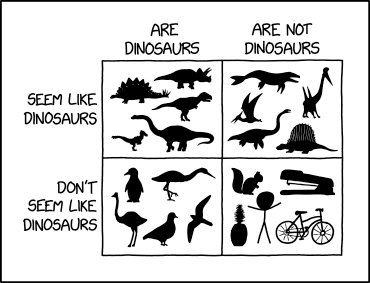
Fancake's Theme for February: Inept in Love
Feb. 5th, 2026 09:15 amrunpunkrun
Just in time for Valentine's Day,
fancake's theme for February is Inept in Love! This round is for all those dingdongs who just do not know what they're doing when it comes to romance or even expressing their feelings for a best friend or family member.If you have any questions about this theme, or the comm, come talk to me!